
Why a 70-Year-Old Norwegian Just Destroyed Everything You Believe About Aging
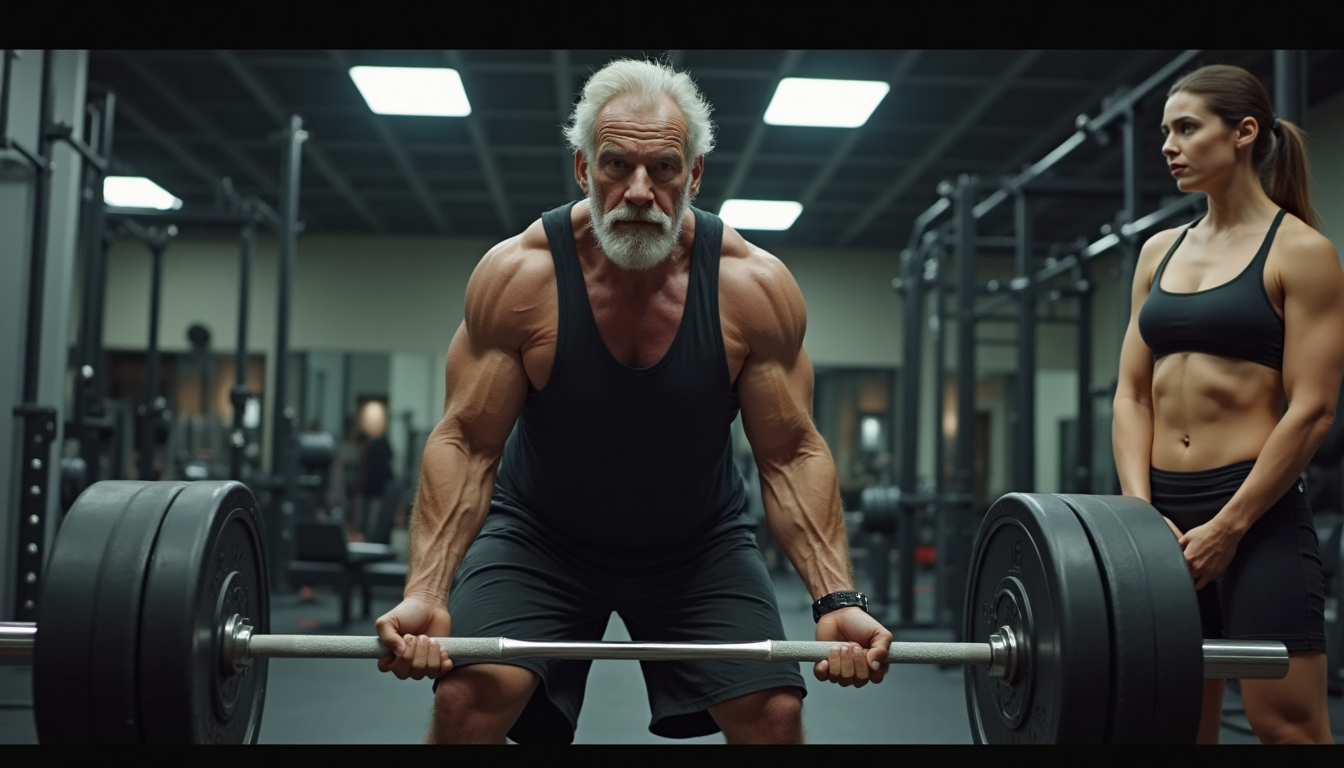
Last week, I watched a 25-year-old "fitness influencer" at my gym struggle with a deadlift that would barely register as a warm-up for Odd Haugen. The kid had the audacity to tell me I should "be careful at my age" when I loaded up more weight than him.
I'm 45, by the way. Apparently, that makes me ancient in gym years.
This interaction stuck with me because it perfectly captures the absolute bullshit narrative our society has swallowed about aging and physical capability. We've collectively decided that hitting 30 means you're past your prime, 40 means you're declining, and anything past 60? Well, you might as well start shopping for mobility scooters.
Then along comes Odd Haugen to completely obliterate that storyline.
The Man Who Refuses to Read the Script
At 70 years old, Odd Haugen isn't just "strong for his age" – a phrase that makes me want to throw a barbell through a window. He's stronger than most people will ever be, period. Full stop. No qualifiers needed.
America's Strongest Man in 1999. Multiple world records. National titles in bodybuilding, weightlifting, AND powerlifting. Oh, and he coached Martins Licis to become the World's Strongest Man in 2019.
But here's what really gets me fired up: the man is SEVENTY and still moving weight that would humble guys a third his age. He's been training for 60 years, and instead of winding down, he's out here making the rest of us look like we're playing with toy blocks.
What the hell is he doing that the rest of us aren't?
It's Not His Genetics (So Stop Making Excuses)
Before you start muttering about "good genes" and "Nordic genetics," let me stop you right there. I've seen plenty of genetically gifted athletes flame out by 35 because they never learned how to train smart, stay consistent, or adapt their approach.
Odd's secret weapon isn't his DNA – it's his complete rejection of the aging narrative that society keeps trying to force-feed us.
Think about it. When was the last time you heard someone say, "I can't wait to see how strong I can get in my 60s"? Never, right? Instead, we're programmed to start making excuses before we even need them. "My knees aren't what they used to be." "I don't recover like I did in my 20s." "I should probably stick to light weights now."
Bullshit. All of it.
The Lies We Tell Ourselves About Aging
I'm gonna get real with you for a minute. The biggest enemy to your long-term strength isn't your age – it's your expectations about your age.
We've created this weird cultural narrative where we celebrate mediocrity as long as it comes with an age qualifier. "Not bad for 50!" "Pretty good for someone over 40!" When did we start grading on a curve based on how many trips we've made around the sun?
Odd Haugen didn't get the memo about slowing down. He never subscribed to the idea that his best days were behind him. While his peers were settling into retirement and complaining about their backs, he was still breaking records and pushing boundaries.
Here's what I think happened: somewhere along the way, Odd decided that the conventional wisdom about aging was optional. Not mandatory. Optional.
And that changes everything.
What 60 Years of Training Actually Teaches You
I've been lifting for over 25 years, and I thought I knew something about consistency. Then I learned about Odd's approach, and I realized I've been thinking too small.
Most of us train like we're sprinting a marathon. We go all-out for a few months, burn ourselves out, take time off, then wonder why we're not making progress. We're playing checkers while guys like Odd are playing 4D chess.
After six decades of consistent training, here's what I think Odd figured out that most of us miss:
Longevity beats intensity. Not in the moment – you still need to train hard. But in the big picture, showing up consistently for 60 years trumps going balls-to-the-wall for 6 months then disappearing.
Your body adapts to what you consistently ask of it. If you consistently ask it to be strong, it finds a way to be strong. If you consistently tell it that it's getting old and should slow down, it listens to that too.
The mental game is everything. Physical strength is just the visible part. The real strength is mental – the refusal to accept limitations that aren't actually there.
Think about this: Odd has been training longer than most people have been alive. He's forgotten more about strength training than most of us will ever learn. But instead of using his experience as an excuse to coast, he's using it as fuel to keep pushing.
The Grip Strength That Tells the Real Story
You want to know what really impressed me about Odd? It's not the big lifts or the records. It's his grip strength.
Grip strength is like a window into someone's real training age. You can fake a lot of things in the gym – you can use straps, belts, and fancy equipment to move weight your body isn't really ready for. But grip strength? That's earned through decades of consistent work.
Odd's grip strength is legendary because it represents something deeper: the accumulation of 60 years of never missing the basics. Every rep, every set, every training session has contributed to building that crushing grip. It's not flashy, but it's real.
And here's the thing – at 70, his grip is still improving. Still adapting. Still getting stronger.
That should tell you everything you need to know about the myths we've accepted about aging.
The Coaching Masterstroke
Here's something that blew my mind: in 2019, at age 67, Odd coached Martins Licis to win World's Strongest Man. Think about that for a second.
While most 67-year-olds are being told to take up gentle water aerobics, Odd was at the pinnacle of elite strength sports, guiding the strongest man on the planet. The student won the ultimate prize, but the teacher was the one who made it possible.
This isn't just about physical capability – it's about relevance. Odd didn't become some old-timer telling stories about "the good old days." He stayed current, stayed sharp, and stayed essential.
That's what happens when you refuse to retire your ambitions along with your AARP card.
What This Means for the Rest of Us
Look, I'm not suggesting we all need to become world-record holders or train elite strongmen. But I am suggesting that we seriously reconsider the story we're telling ourselves about what's possible as we age.
If a 70-year-old Norwegian can be stronger than 99% of the population, what does that say about the limits we've accepted for ourselves?
Maybe the problem isn't our age. Maybe it's our expectations about our age.
Maybe instead of planning our decline, we should be planning our next personal record.
Here's what I've learned from studying guys like Odd: they don't train despite their age – they train because of their age. Every year that passes isn't a reason to slow down; it's a reminder that time is limited and there's still work to do.
The Real Secret (It's Not What You Think)
After digging into Odd's story, I think I've figured out his real secret. It's not a special program or some Norwegian training method. It's not superior genetics or access to better equipment.
The secret is this: he never accepted that getting older meant getting weaker.
While the rest of us were busy lowering our standards and making excuses, Odd was busy proving that those standards were bullshit to begin with.
He didn't just maintain his strength as he aged – he continued to develop it. At an age when most people are worried about maintaining independence, he's maintaining world-class athletic performance.
That's not luck. That's not genetics. That's a choice.
Your Move
So here's my question for you: what story are you telling yourself about your physical future?
Are you already writing the script for your decline? Planning your retreat from the activities you love? Making peace with "good enough for your age"?
Or are you ready to follow Odd's example and write a different story entirely?
Because here's the truth that nobody wants to admit: the main difference between you and Odd Haugen isn't talent or genetics or access to fancy equipment. It's expectations.
He expected to stay strong, so he did.
What are you expecting?
The next time some 25-year-old tells you to "be careful at your age," maybe it's time to show them what age really looks like when you refuse to surrender to it.
Odd Haugen is 70 years old and stronger than you. But more importantly, he's proof that everything you've been told about aging and physical decline is optional.
The only question is: are you going to keep buying into the myth, or are you ready to start writing your own story?
Time to choose. The barbell is waiting.